Modern surface treatment processes enable users to precisely adjust material properties. For example, the coefficient of friction can be varied over a wide range; surfaces can be functionalized to be hydrophobic or hydrophilic and even antibacterial.
However, producing such microstructure is often problematic. In ultrashort pulse laser (USP laser) ablation, a single small laser spot is guided over the entire surface, making the process very time-consuming for large areas. Wet chemical etching not only produces waste that is harmful to health and the environment, but the process is also inflexible because it requires masks. Electrical discharge machining (EDM) also has its disadvantages: It consumes a great deal of energy, produces toxic sludge, and only delivers random, stochastic microstructures. Unlike the laser process, the surface properties cannot be specifically tailored to subsequent process steps.
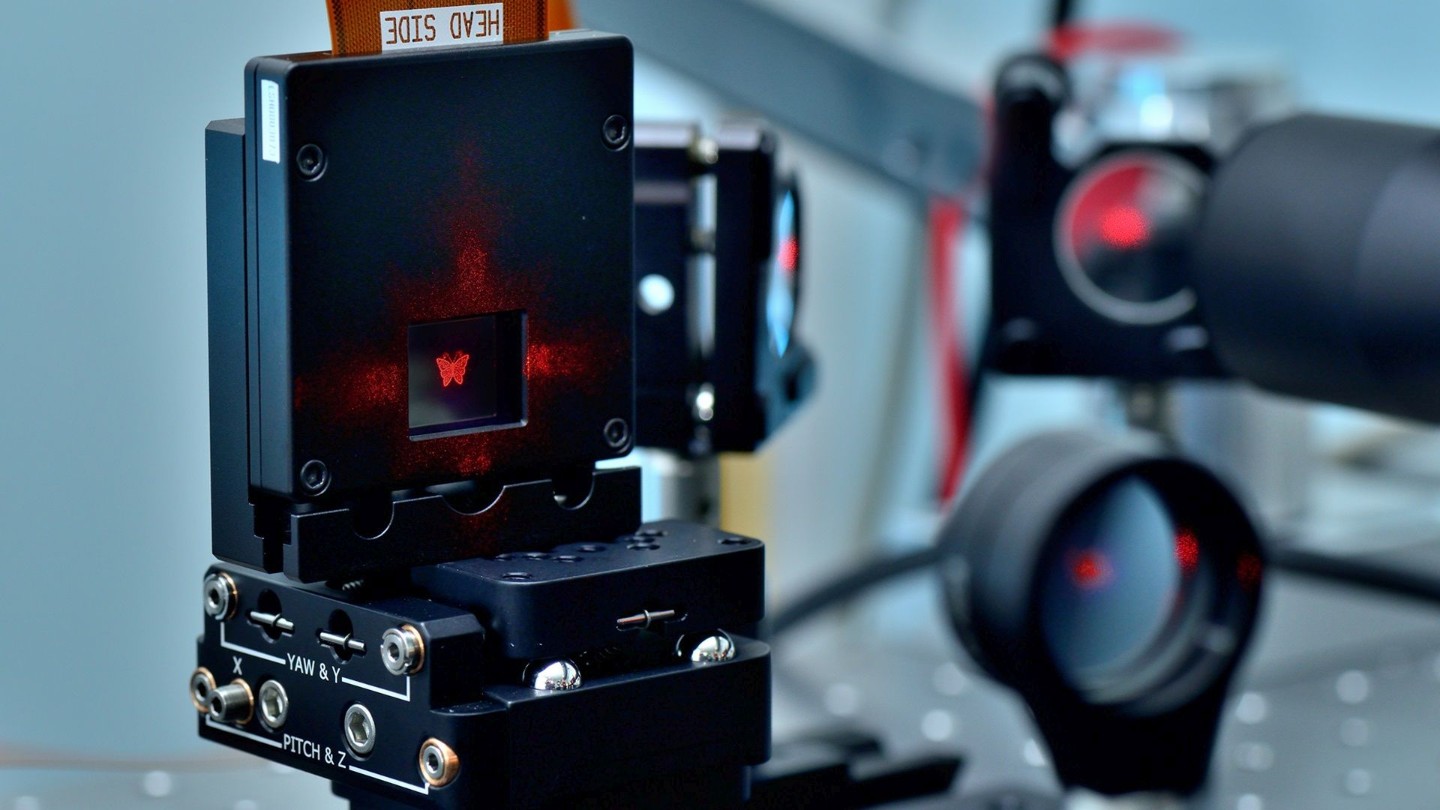
"The optical stamping process allows this problem to be circumvented," explains Sönke Vogel from the Micro and Nano Structuring Group at the Fraunhofer Institute for Laser Technology ILT. Vogel and his team use a spatial light modulator (SLM) to precisely shape the beam of a USP laser into the desired pattern and apply it to the workpiece surface in a single step. "This creates microstructures that are precise, reproducible, and made in a fraction of the time previously required, with significantly less wear and tear compared to mechanical processes and without the need to retool the optics.
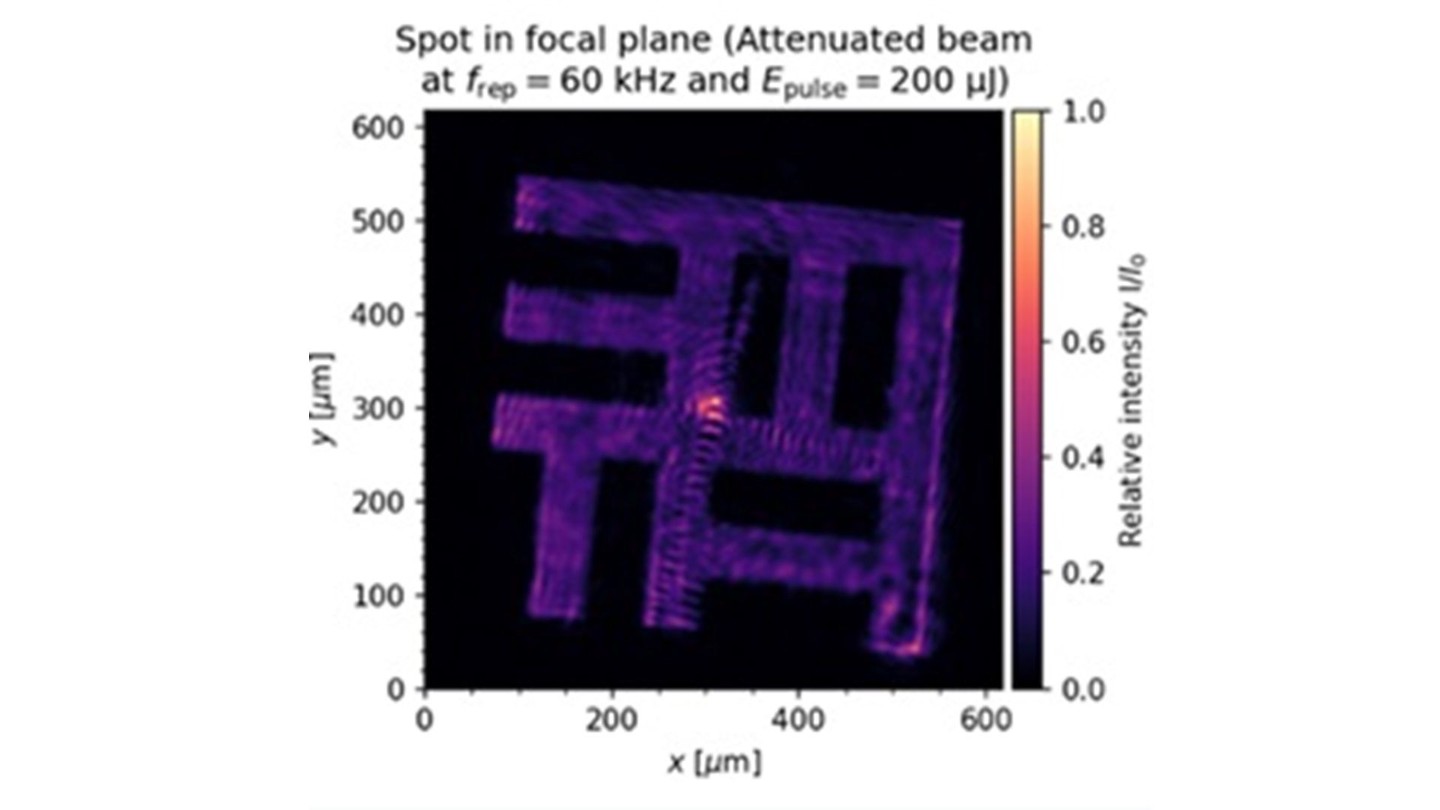
In optical stamping, the laser beam is not guided across the surface in a vector-based manner using scanner mirrors, as is usually the case, but is shaped into the desired structural pattern in a single step and transferred directly to the workpiece. The core component is an SLM with LCoS (Liquid Crystal on Silicon) technology. This reflective liquid crystal display changes the local refractive index with pixel precision, thereby modulating the phase front of the incident laser light. Thus, an initially round beam is transformed into a complex, freely selectable intensity profile.
Paul Buske, Computational Optics at RWTH Aachen University – Chair of Technology of Optical Systems TOS, develops phase masks for the SLM using optical neural networks. Each phase mask corresponds to an optically realized plane, and wave optics methods are used to calculate the connections between these planes. This allows phase masks for almost any desired beam profile to be created quickly and precisely. “Thanks to established AI training methods, optical neural networks enable unprecedented flexibility in beam shaping,” explains Buske.
Unlike permanently installed beam shaping optics, this approach makes it possible to flexibly adjust the pattern via software without mechanical changes. "Pattern sizes and geometries can be varied, expanded, or completely replaced," Vogel continues. USP lasers with pulse durations in the pico- and femtosecond range remove material with high precision while minimizing thermal effects. Thanks to this innovation, industry can generate deterministic microstructures with precisely reproducible geometry, reduce processing times significantly, and adapt structures to the specific requirements of individual components or subsequent processes.
 Fraunhofer Institute for Laser Technology ILT